Christian Dior · The New Look · 1947
A Heritage Essay · No. 04

Christian DiorThe House & Its Designers

The Normandy designer who, in February 1947, used so much fabric in a single dress that he ended postwar rationing and began modern fashion in a single afternoon.

Scroll
An Introduction

The most consequential single fashion collection of the twentieth century.

In February 1947, in a small salon on Avenue Montaigne in Paris, a forty-one-year-old designer named Christian Dior presented his first collection. The dresses had cinched waists, exaggerated shoulders, and long, swirling skirts that used, in some cases, twenty yards of fabric apiece. The room was full of editors who had spent the previous six years writing about wartime rationing, austerity, and the boxy uniformed silhouettes Nazi-occupied Paris had been allowed to produce. The editor-in-chief of Harper's Bazaar, Carmel Snow, stood up at the end of the show and said: "It is quite a revolution, dear Christian. Your dresses have such a new look." The name stuck. Within two years, Dior collections were seventy-five percent of all Paris fashion exports. Within five, the company had become the single largest fashion exporter in France.

What followed across the next seventy-eight years is among the most operatic stories in luxury: a financier patron who took it from concept to global brand in a decade, a sudden death at the peak, a twenty-one-year-old prodigy named Yves Saint Laurent who saved the house and was then pushed out of it, an interregnum of conservatism, then a string of the loudest creative directors in fashion history — John Galliano, Raf Simons, Maria Grazia Chiuri, Kim Jones, and now Jonathan Anderson — each of them, in turn, asked to take what Christian Dior had built in 1947 and translate it for a new century.

What follows is the story in two chapters: the house, and the designers who, generation after generation, have rewritten what Dior means.

The New Look
— Chapter One —

The House

The financier, the designer, the New Look, and the eight decades after.

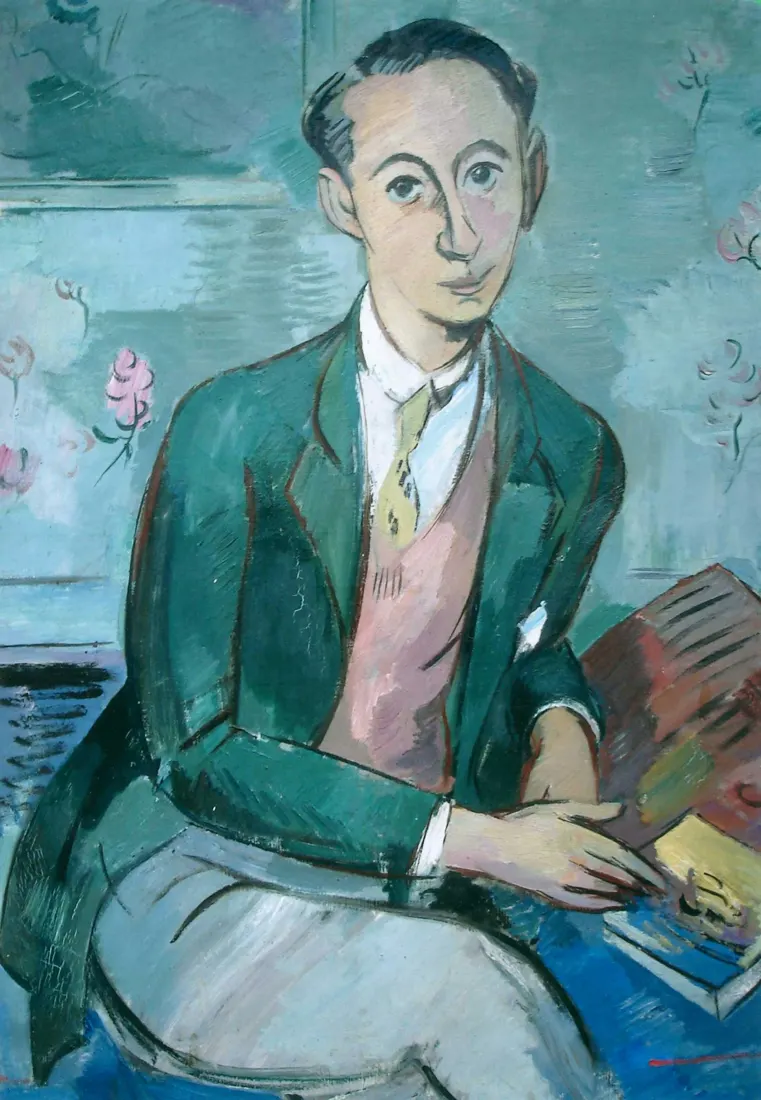
Christian Dior, the designer
Christian Dior · 1905 – 1957 · Normandy designer, Paris house
1946

Marcel Boussac calls.

Christian Dior was born in 1905 in Granville, Normandy, the son of a wealthy fertiliser manufacturer. He had wanted to be an architect. His family bankrupted itself in the 1929 crash, his father lost everything, his beloved mother died of cancer, and Christian — by then thirty — drifted into Paris fashion through an art-dealing gallery he had run with friends, then through the design rooms of Robert Piguet and Lucien Lelong, where he sat out the German occupation designing dresses for the wives of Nazi officers because Lelong had ordered the entire house to do it under threat of closure.

The war ended in 1945. By 1946 Dior, then forty-one, was unknown outside a small circle of Paris designers, and would have remained that way except that one of the wealthiest men in France — the textile industrialist Marcel Boussac, owner of the Boussac cotton empire — had decided he wanted to revive a defunct fashion house called Philippe et Gaston and was looking for a designer to lead it.

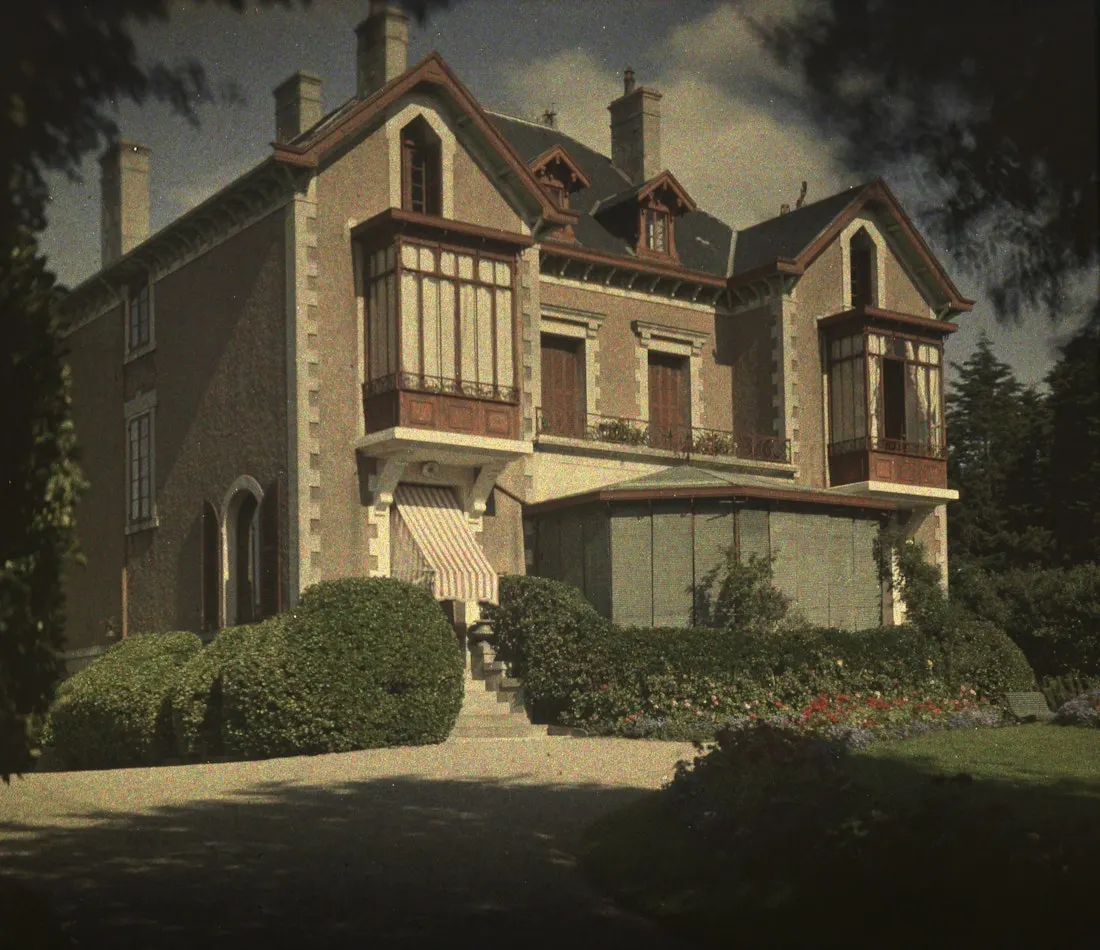
Dior, in the meeting, made an extraordinary counter-proposal. He did not want to revive someone else's name. He wanted to start a house in his own name, financed by Boussac, with full creative control. Boussac — perhaps amused, perhaps recognising the seriousness of the man across the table — agreed. He committed six million francs (roughly seven million dollars in today's money) and a small mansion at 30 Avenue Montaigne. The deal made Dior, technically, an employee of Boussac, but with the unprecedented condition that the house carried his name.

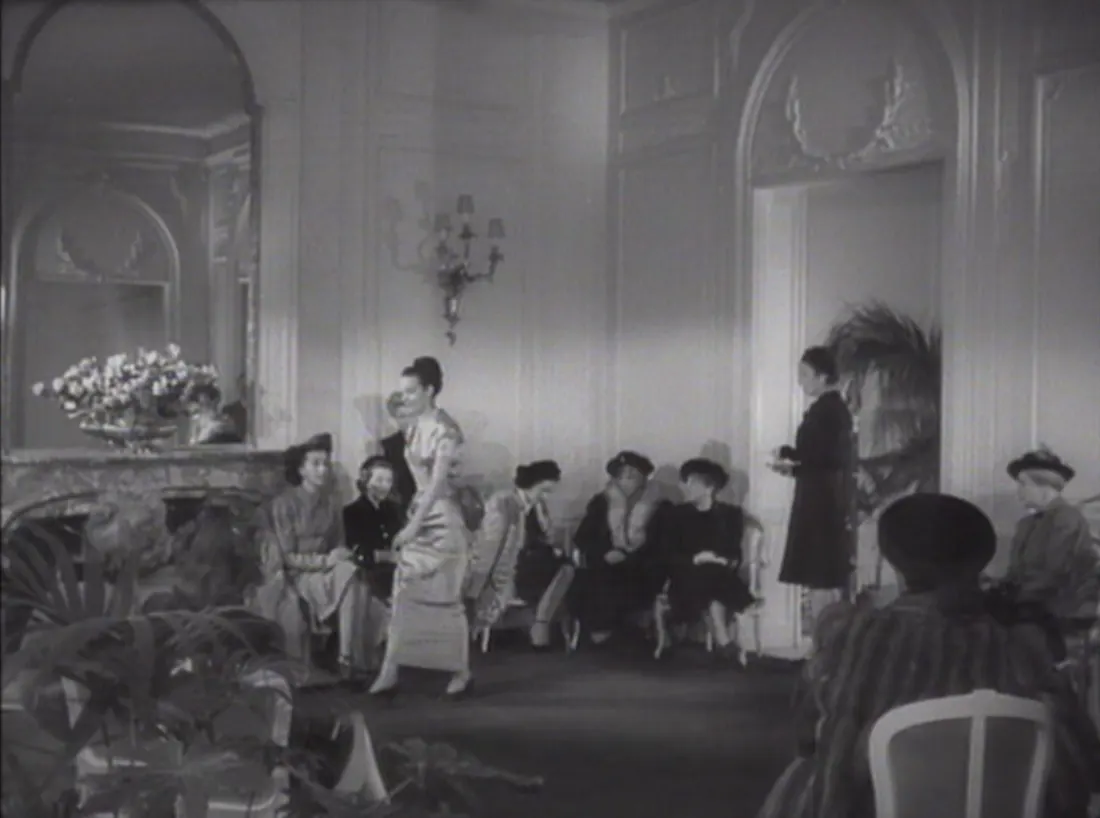
The first collection was presented on the twelfth of February, 1947. The salon at Avenue Montaigne held one hundred and seventy people. Among them: Carmel Snow.

Marcel Boussac · the financier · 30 Avenue Montaigne · 1946

The New Look, 1947
The Corolle line · February 12, 1947 · what the press named "The New Look"
February 12, 1947

The New Look.

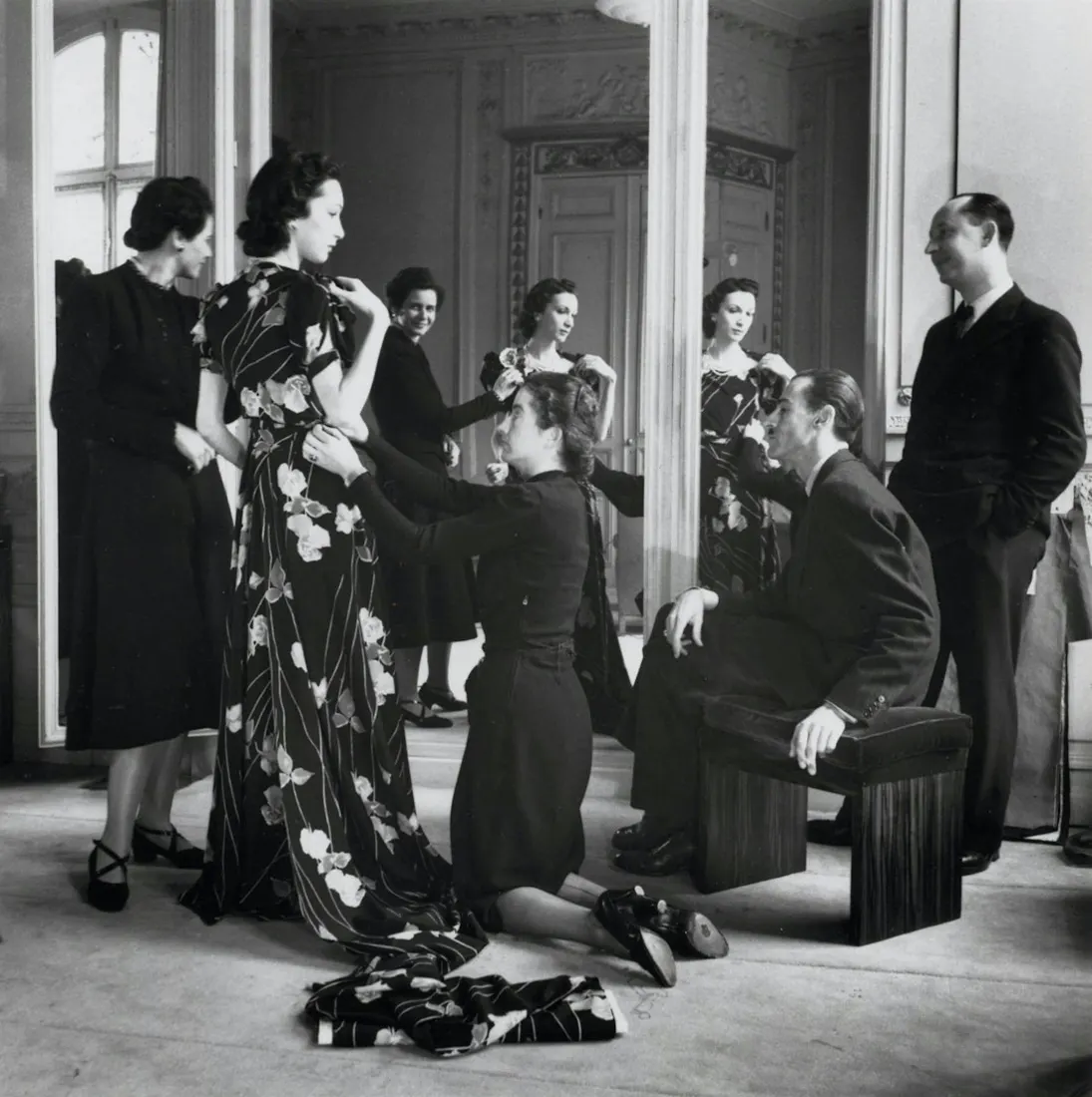
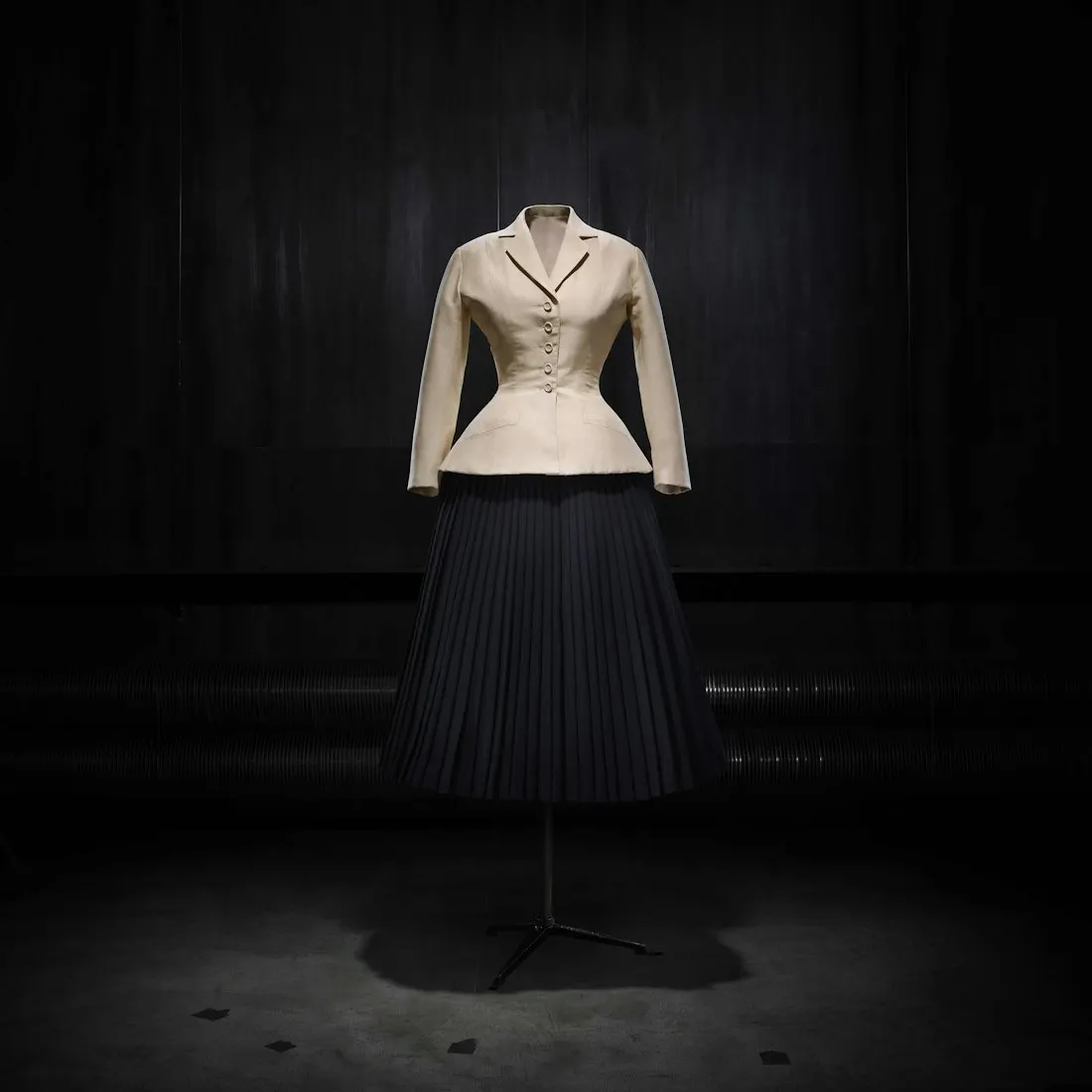
The collection had two names — internally Dior had called it the Corolle line, for the petals of a flower — but the name that stuck was Carmel Snow's. The clothes had narrow shoulders, cinched waists tightened with built-in corsetry, padded hips, and skirts that fell to mid-calf using extraordinary quantities of fabric — in some cases twenty yards per dress, at a moment when Britain was still rationing fabric to four yards per garment. The construction was openly couture: hand-stitched horsehair underskirts, internal corsetry, hand-finished hems. The look harked back to the bell-shaped silhouettes of the 1860s and forward to nothing yet existing in 1947.

The press response was uniformly stunned. The American press loved it. The British press, mindful of ongoing rationing, condemned it as wasteful. A group of women in Paris formed an organisation called the Ligue des Maris Pauvres — the "League of Broke Husbands" — and protested outside the Dior showroom. Stones were thrown at women wearing the New Look in the streets. None of it mattered. The collection re-set the silhouette of women's fashion for the next decade.

By the end of 1947, Dior had launched its first fragrance — Miss Dior, named after his sister Catherine, who had survived Ravensbrück concentration camp. By 1949, the house was producing seventy-five percent of all Paris fashion exports and roughly five percent of France's total national export revenue. Boussac's six-million-franc investment was earning back many multiples of itself every year.

The Bar Suit · The Corolle line · The dress that ended rationing

1950

The invention of the modern fashion license.

Dior's success generated a problem most fashion houses had never had: too much demand. The Avenue Montaigne atelier could not produce enough couture dresses for the global market that wanted them. Jacques Rouet, the general manager Boussac had installed to run the business side of Dior, came up with a solution that would, eventually, define the modern luxury industry: the brand licence.

Beginning in 1950, Rouet authorised third-party manufacturers to produce neckties, hosiery, gloves, hats, handbags, stockings, and small leather goods under the Dior name, in exchange for a percentage royalty on every item sold. The licensee handled all manufacturing, distribution, and marketing. Dior earned the royalty. By the late 1960s there were several hundred Dior licensees in dozens of countries. The brand was, by the early 1970s, on toilet paper, ashtrays, and budget-grade ties sold in airport gift shops in Asia.

The French Chamber of Culture publicly denounced the strategy as devaluing the heritage of French fashion. Dior responded by counting the money. The licensing income, by 1975, was several times larger than the income from the actual couture business at Avenue Montaigne. The licensing model — which would, much later, become a defining structural problem for the brand — was, in its first two decades, the most lucrative invention in the postwar fashion industry.

The licensing playbook would, by the 1980s, be copied by Pierre Cardin and Yves Saint Laurent and, eventually, every major house. The success of those copies — and the eventual industry-wide reckoning over brand dilution that came with them — is a direct inheritance of what Jacques Rouet invented at Dior in 1950.

Jacques Rouet · the licensing playbook · 1950

Christian Dior 1952 vintage advertisement
A 1952 Dior advertisement — five years into the New Look era
Christian Dior, the man
Christian Dior · circa 1957 · the cover of Time, weeks before his death
March 1957 — October 1957

The cover of Time. The heart attack in Tuscany.

By March 1957, Christian Dior was on the cover of Time magazine, an honour rare for any designer at any point. The cover line: "The Man Who Sets the Style." Couture houses across Paris were imitating his silhouettes. Boussac and Rouet had built a global business around him. Dior himself had, by his own account, never been happier.

He travelled in October 1957 to Montecatini, a small Tuscan spa town, to take the waters and rest from what had been a punishing few seasons of work. On the twenty-fourth of October, while playing cards after dinner, he suffered a massive heart attack. He died that night. He was fifty-two.

The news reached Paris within hours. Marcel Boussac and Jacques Rouet found themselves, that week, facing a question no fashion house had previously had to answer at this scale: can a brand survive the death of its named founder? In 1957, the conventional wisdom was no. Coco Chanel had retired in 1939 and effectively closed the house. Schiaparelli had collapsed without its founder. Lucien Lelong had wound down after Lelong's death. Boussac genuinely considered closing Dior.

But there was an option. Inside the Avenue Montaigne atelier, working as a senior assistant in Christian Dior's design studio, was a twenty-one-year-old who had been hired in 1955, the son of an Algerian-born French insurance executive, named Yves Mathieu-Saint-Laurent.

Christian Dior · 1905 – 1957

Photo · No. 05
v
Y·SL
Yves Saint Laurent — promoted at twenty-one to lead Dior. His first collection, Trapèze, in 1958, was hailed as the rescue of French fashion. His second, the Beat line, in 1960, ended his Dior tenure.
Replace · Vogue Runway, Time Magazine, Bibliothèque Nationale de France
1957 — 1960

Yves Saint Laurent at twenty-one.

The decision Boussac and Rouet made that autumn was, on its face, ridiculous. The most valuable fashion house in the world would be turned over, immediately, to a twenty-one-year-old. Yves Saint Laurent had spent two years at Dior, the last six months as Christian's personal assistant. The press release went out in November 1957. The first collection Saint Laurent designed under his own name as head of Dior — the Trapèze line — was presented in January 1958, three months after his promotion.

It was a sensation. The silhouette dropped the cinched waist that had defined the New Look, replacing it with a tent-like A-line dress that flowed from the shoulders. The Paris press, half-expecting a disaster, embraced it. Paris Match ran a cover line: "Yves Saint Laurent saves France." Carmel Snow flew to Paris and declared the collection the most important since 1947. Dior was, for the moment, saved.

What happened next is one of the great cautionary tales about the relationship between a creative director and the businessman who employs him. Across his next four collections, Saint Laurent grew more radical. He introduced the beatnik silhouette — black leather, crocodile jackets, motorcycle aesthetic — in the Autumn 1960 Beat line. Marcel Boussac, by then in his late seventies and not understanding any of it, hated the collection. So did most of the established Dior couture clientele.

Saint Laurent was called up to French military service in 1960 — the Algerian War was at its peak — and shipped to a base for basic training. Within three weeks, the stress of the call-up triggered what was almost certainly a psychotic break; he was hospitalised at the Val-de-Grâce military hospital in Paris and given electroshock therapy. While he was hospitalised, Boussac removed him from Dior and replaced him with the more conservative Marc Bohan.

When Saint Laurent recovered, in 1961, he sued Dior for breach of contract — and won. He took his settlement money, paired with his life partner and business manager Pierre Bergé, and in 1962 launched the house of Yves Saint Laurent. It would, eventually, become one of the most successful luxury houses in fashion history. Today it is owned by Kering — the conglomerate that owns Gucci, Dior's primary rival.

This is, of course, what makes the Yves Saint Laurent succession at Dior one of the most consequential mistakes in luxury-business history. The house had its perfect designer. It pushed him out. He went and built the rival that, sixty years later, is one of the few competitors LVMH has not been able to acquire.

Trapèze (1958) · Beat (1960) · Yves Saint Laurent · 1957 – 1960

1961 — 1989

Twenty-nine years of Marc Bohan.

If the previous decades of Dior had been chaotic creative succession, what followed was almost the opposite. Marc Bohan, the conservative designer Boussac promoted in 1960 after firing Saint Laurent, would hold the position for twenty-nine years. By tenure alone he is the longest-serving creative director in the history of any major French luxury house, ahead even of Karl Lagerfeld at Chanel.

His era is, in retrospect, treated by the fashion press as a kind of long stable plateau — accomplished commercial collections that kept the brand profitable but rarely set the agenda. Bohan understood what Saint Laurent had refused to: that the Dior couture client wanted clothes that referenced the Christian Dior tradition without re-inventing it. He produced clothes that did exactly that, season after season, for nearly three decades.

What kept Dior alive commercially during those decades, however, was almost entirely the licensing income that Jacques Rouet had invented in 1950. By the early 1980s Dior was on perfume bottles, sunglasses, lighters, ties, watches, and — under license — a thousand products worldwide. The brand had become, almost without anyone noticing, primarily a licensing business with a couture house attached.

Meanwhile, the Boussac empire — Marcel had died in 1980 — was unravelling. The textile group had been losing twenty million dollars a year by the late 1960s. In 1978, with French national debt deepening, the entire Boussac empire filed for what was, at the time, the largest corporate bankruptcy in French history. The government took over the wind-down. Dior, buried inside it, kept producing. The empire was, by 1984, finally about to be sold.

The man who bought it was thirty-five years old, recently returned to France from selling Palm Beach condominiums in the United States, and had grown up listening to his mother talk about Christian Dior over breakfast. His name was Bernard Arnault.

Marc Bohan · 1961 – 1989 · the quietest twenty-nine years in Dior history

Photo · No. 06
vi
Bohan
Marc Bohan — the longest-tenured creative director in any major French luxury house. Twenty-nine years of disciplined, commercial, deliberately quiet Dior couture.
Replace · Vogue Runway, BoF archive
Dior: Designer of Dreams exhibition
The brand from 1957 to 1989 · The brand under Arnault, 1984 →

The license empire that built Dior's modern scale — and the man who quietly bought it for one symbolic franc.

1984

Bernard Arnault buys the company.

The story of how Bernard Arnault acquired Dior is, by now, the most-told story in luxury. The bankrupt Boussac empire — textiles, the Bon Marché department store, hundreds of factories, twenty thousand union employees, and Dior — was put up for sale by the French government for, famously, one symbolic franc. Arnault paid that single franc plus committed sixty million dollars (fifteen of his own family money, forty-five from Lazard Frères) to take on the debt, the workers, and the assets.

He stripped Boussac to two things: Dior, and the Bon Marché. Everything else, including the Peaudouce disposable-diaper division (for which alone he received four hundred million dollars), he sold off over the next two years. He laid off nine thousand of the twenty thousand textile workers. The French press called him le Terminator.

What he kept was Dior. He kept it because his mother had taught him to. He had told himself, on the taxi ride from JFK airport in 1971 — when the taxi driver said he didn't know who Georges Pompidou was but he knew Christian Dior — that there was something about the proper noun "Dior" that was worth, eventually, an empire. In 1984, for one franc and a lot of finance, he had bought it.

The first thing Arnault did with Dior, between 1984 and 1989, was end the licensing-based dilution. He bought back as many licensee contracts as he could, gradually consolidated production back to in-house ateliers, and let the lower-tier products fade out of the market. The objective: take a brand whose name was on airport-grade neckties and return it to one whose name only appeared on couture, perfume, and a small set of leather goods of the highest order.

By 1989, with the Marc Bohan era ending after nearly three decades, Arnault was ready to do for Dior what he had spent the previous five years preparing to do for the brand: hire a great creative director and let him make noise. The first try, in 1989, was the Italian designer Gianfranco Ferré, who arrived from his own label. The second try, in 1996, was the one that changed everything.

Bernard Arnault · December 1984 · one symbolic franc

Bernard Arnault era at Dior
Bernard Arnault · chairman of LVMH, owner of Christian Dior since 1984
Princess Diana with the Lady Dior bag
Princess Diana · with the Lady Dior · 1995 — the bag became hers
1995

The Lady Dior.

In late 1994, the wife of the French president, Bernadette Chirac, asked the house of Dior to make a small handbag — quilted, top-handle, structured — that she could send to Diana, Princess of Wales, on the occasion of a state visit. The bag had no name yet. The atelier produced it in fall 1994. Diana received it during her September 1995 visit to Paris and was photographed carrying it to a Cézanne exhibition the next day.

She carried it everywhere. Through the next two years — the most photographed two years of her life — Diana was seen with the bag at hospital visits, political meetings, charity events, in airports. Within three months of the September 1995 visit, Dior had sold every Lady Dior the atelier could produce. In 1996, with Diana's permission, Dior formally renamed the bag the Lady Dior.

The Lady Dior is, to this day, the company's most successful leather-goods product. Hundreds of thousands have been sold. Each is hand-finished, each takes roughly eight hours of work, each costs roughly five thousand dollars. The bag's success in the late 1990s, more than any single product, signalled to Bernard Arnault that what Dior needed next was not just a great couturier, but a great couturier paired with a leather-goods strategy that could be the commercial heart of the business.

The next year, in October 1996, Arnault made the appointment that would deliver both.

Lady Dior · 1995 → · the bag that Diana made

The House · Timeline

Seven decades of couture, succession, and reinvention.

1946
Boussac
finances Dior
The New
Look
1947
1957
Dior dies
YSL succeeds
YSL pushed
out
1960
1961
Marc Bohan
era begins
Arnault buys
Boussac
1984
1989
Gianfranco
Ferré
Lady Dior
+ Galliano
1996
2011
Galliano
scandal
Raf
Simons
2012
2016
Maria Grazia
Chiuri
Jonathan
Anderson
2025
" It is quite a revolution, dear Christian. Your dresses have such a new look.
Carmel Snow · Editor of Harper's Bazaar · February 12, 1947
— Chapter Two —

The Designers

3 eras, 8 shows, 243 looks. Click any show for the full runway gallery.

Womenswear · 1996 — 2011

John Galliano

Galliano's Dior was theatre — couture as fantasy, his Spring 1998 collection set in a Paris train station with models on bicycles, the Tron-inspired Spring 2003. He designed the Saddle bag (1999). His abrupt firing in March 2011 after an antisemitic outburst ended fifteen years of the most theatrical couture in Paris.

Spring 2003 Ready To Wear runway look
22 looks
View runway →

Spring 2003 Ready To Wear

22 looks · Vogue Runway
Spring 2010 Ready To Wear runway look
31 looks
View runway →

Spring 2010 Ready To Wear

31 looks · Vogue Runway
Womenswear · 2012 — 2015

Raf Simons

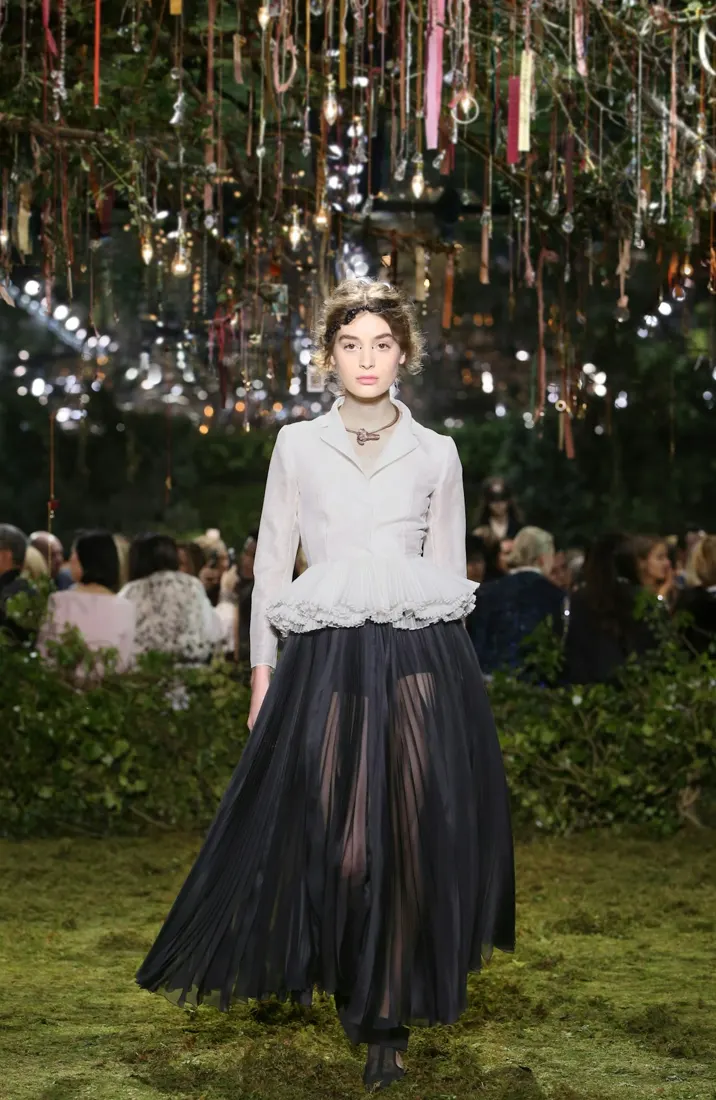
The Belgian minimalist of Jil Sander joined Dior in 2012 — a polar opposite to Galliano's theatre. His couture debut, six weeks after appointment, was filmed for the documentary 'Dior and I.' He stripped the maison back to architecture and Bar jackets. He left in October 2015 to focus on his own label, then went to Calvin Klein.

Fall 2012 Couture runway look
14 looks
View runway →

Fall 2012 Couture

14 looks · Vogue Runway
Spring 2015 Ready To Wear runway look
36 looks
View runway →

Spring 2015 Ready To Wear

36 looks · Vogue Runway
Womenswear · 2016 — 2024

Maria Grazia Chiuri

Chiuri arrived from Valentino in July 2016 as Dior's first-ever female creative director. Her tenure made the maison overtly feminist — the 'We Should All Be Feminists' T-shirt of Spring 2017, the Book Tote (2018), the Bobby (2020), the Lady 95.22. Eight years; her exit announced in June 2024.

Spring 2017 Ready To Wear runway look
42 looks
View runway →

Spring 2017 Ready To Wear

42 looks · Vogue Runway
Spring 2020 Ready To Wear runway look
37 looks
View runway →

Spring 2020 Ready To Wear

37 looks · Vogue Runway
Spring 2024 Ready To Wear runway look
30 looks
View runway →

Spring 2024 Ready To Wear

30 looks · Vogue Runway
Fall 2024 Ready To Wear runway look
31 looks
View runway →

Fall 2024 Ready To Wear

31 looks · Vogue Runway
— Chapter Three —

The Bags

14 icons. Each one a scene; each scene a gallery.

Saddle — Dior
5 photos
View gallery →
Saddle alt view
Saddle alt view
Saddle alt view
Saddle alt view
No. 02

Saddle

1999 (reissued 2018) · John Galliano / MGC reissue

Y2K icon revived by Maria Grazia Chiuri.

Book Tote — Dior
7 photos
View gallery →
Book Tote alt view
Book Tote alt view
Book Tote alt view
Book Tote alt view
No. 03

Book Tote

2018 · Maria Grazia Chiuri

Personalisable canvas tote.

Bobby — Dior
3 photos
View gallery →
Bobby alt view
Bobby alt view
No. 04

Bobby

2020 · Maria Grazia Chiuri

Named for Christian Dior's dog.

Caro — Dior
3 photos
View gallery →
Caro alt view
Caro alt view
No. 05

Caro

2020 · Maria Grazia Chiuri

Named after Caroline Dior, sister of Christian.

30 Montaigne — Dior
4 photos
View gallery →
30 Montaigne alt view
No. 06

30 Montaigne

2019 · Maria Grazia Chiuri

Named for Dior's flagship address.

Diorama — Dior
15 photos
View gallery →
Diorama alt view
Diorama alt view
Diorama alt view
Diorama alt view
No. 07

Diorama

2015 · Raf Simons

Geometric chain-strap shoulder bag.

Be Dior — Dior
4 photos
View gallery →
Be Dior alt view
Be Dior alt view
Be Dior alt view
No. 08

Be Dior

2014 · Raf Simons

Top-handle flap.

Diorever — Dior
7 photos
View gallery →
Diorever alt view
Diorever alt view
Diorever alt view
Diorever alt view
No. 09

Diorever

2015 · Raf Simons

Wing tote.

Miss Dior — Dior
1 photo
View gallery →
No. 10

Miss Dior

1947 (modern reissue) · various

Originally a perfume; modern bag is recent.

Diorcamp — Dior
8 photos
View gallery →
Diorcamp alt view
Diorcamp alt view
Diorcamp alt view
Diorcamp alt view
No. 11

Diorcamp

2018 · Maria Grazia Chiuri

Modern messenger.

Lady D-Lite — Dior
13 photos
View gallery →
Lady D-Lite alt view
No. 12

Lady D-Lite

2020 · Maria Grazia Chiuri

Embroidered casual Lady Dior.

Lady 95.22 — Dior
8 photos
View gallery →
Lady 95.22 alt view
Lady 95.22 alt view
Lady 95.22 alt view
Lady 95.22 alt view
No. 13

Lady 95.22

2022 · Maria Grazia Chiuri

Sculptural reinterpretation of Lady Dior.

Toujours — Dior
4 photos
View gallery →
Toujours alt view
Toujours alt view
Toujours alt view
No. 14

Toujours

2024 · Maria Grazia Chiuri

Recent slouchy tote launch.

Diorissimo — Dior
8 photos
View gallery →
Diorissimo alt view
Diorissimo alt view
Diorissimo alt view
Diorissimo alt view
No. 15

Diorissimo

2010 · Bill Gaytten

Open tote with leather flowers.

All Bags · Quick Index

14 at a glance.

Saddle
Saddle
1999 (reissued 2018)
Book Tote
Book Tote
2018
Bobby
Bobby
2020
Caro
Caro
2020
30 Montaigne
30 Montaigne
2019
Diorama
Diorama
2015
Be Dior
Be Dior
2014
Diorever
Diorever
2015
Miss Dior
Miss Dior
1947 (modern reissue)
Diorcamp
Diorcamp
2018
Lady D-Lite
Lady D-Lite
2020
Lady 95.22
Lady 95.22
2022
Toujours
Toujours
2024
Diorissimo
Diorissimo
2010